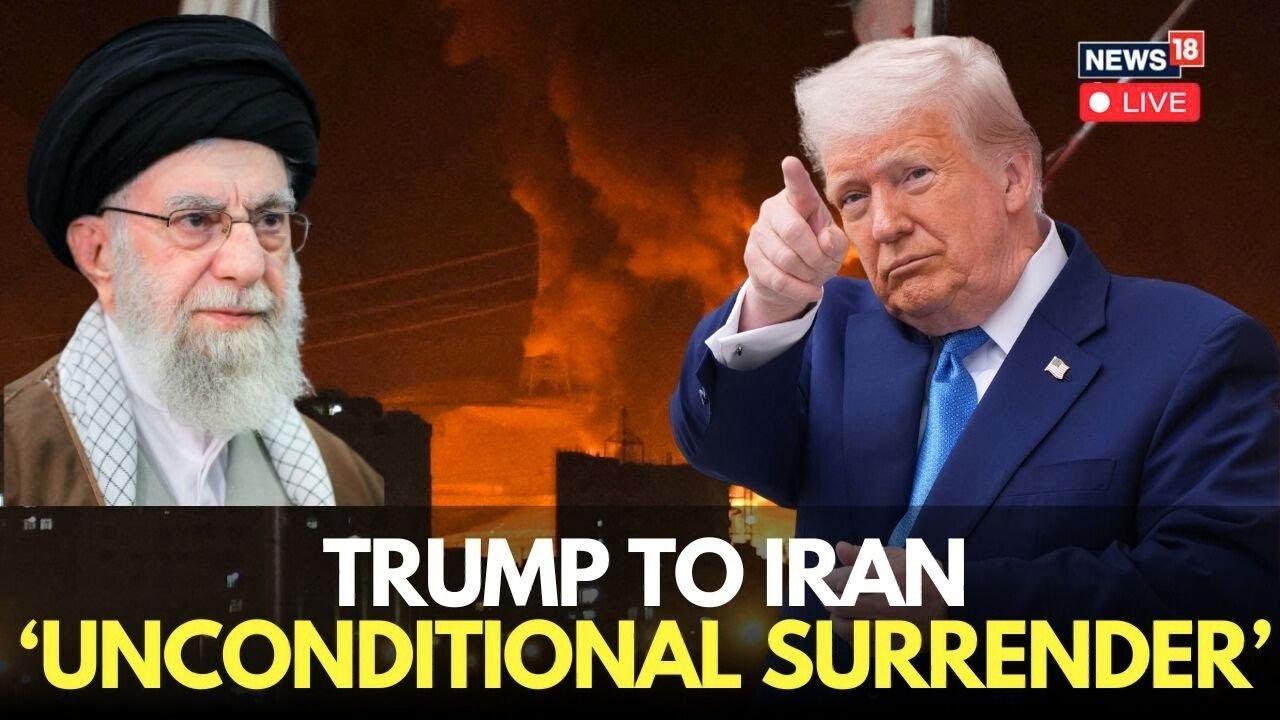
Tensions in the Middle East escalated sharply this week as Donald Trump called on Iran to make an “unconditional surrender” while Israel continued a wave of nationwide airstrikes across Iran.
Explosions were reported in several Iranian cities as both sides exchanged missile attacks. Meanwhile, global leaders are watching closely, concerned that the conflict could grow into a wider regional crisis.
For many people around the world, the biggest question right now is simple: Will the United States become directly involved?
Escalating Conflict Between Israel and Iran
The conflict intensified after Israeli forces launched large-scale airstrikes targeting Iranian military and missile infrastructure.
According to Israeli officials, multiple strategic locations were hit, including missile storage facilities and launch sites around Tehran. Air raid sirens also sounded across major Israeli cities after Iran responded by firing missiles toward Israel.
The strikes come during one of the most tense moments in the region in years. Analysts say the pace and scale of the attacks suggest the situation could continue to escalate.
Key developments so far
- Israeli airstrikes targeted missile bases and storage sites in Tehran
- Iran launched retaliatory missile attacks toward Israeli cities
- Air raid sirens sounded in Tel Aviv and southern Israel
- Iranian internet and communication networks faced widespread disruption
- Thousands of civilians reportedly began leaving major cities
The rapid escalation has raised fears that the conflict may expand beyond the two countries.
Trump’s Warning and Demand for “Unconditional Surrender”
On Tuesday, President Donald Trump posted several messages on his social platform Truth Social, taking a noticeably tougher stance.
He warned that U.S. patience with Iran was “wearing thin” and demanded that Iran surrender.
In one message, he wrote that U.S. officials know the location of Iran’s Supreme Leader but added that there were currently no plans to target him.
Shortly after, Trump posted a brief but striking message: “UNCONDITIONAL SURRENDER!”
The statement quickly spread across global news outlets and social media, adding further tension to an already volatile situation.
What Trump’s statement could mean
Political analysts believe the message signals increased pressure on Iran but does not necessarily confirm direct U.S. military action.
However, it clearly indicates Washington is closely monitoring the situation and could take additional steps if tensions continue to rise.
Is the United States Preparing for Military Involvement?
Behind the scenes, signs suggest the United States is strengthening its military readiness.
Reports indicate that the U.S. is deploying additional fighter jets to the region and extending current military deployments.
Defense officials described the move as a defensive measure, mainly focused on protecting American forces and supporting Israel’s missile defense systems.
Trump also held a 90-minute meeting with the National Security Council, though officials have not released details about what was discussed.
While no official decision has been announced, military analysts say these actions are often taken when governments want to remain prepared for multiple scenarios.
Major Targets and Strategic Concerns
One of the key concerns in the current conflict involves Iran’s nuclear infrastructure.
The International Atomic Energy Agency reported that Israeli strikes hit areas near Iran’s nuclear enrichment facility in Natanz.
However, the heavily fortified Fordow nuclear facility remains intact.
Fordow is buried deep underground and protected by reinforced structures, making it extremely difficult to damage with conventional weapons.
Only the United States possesses certain bunker-busting bombs believed capable of penetrating such facilities.
Because of this, some experts believe Israel may need U.S. assistance if it intends to target Fordow.
Key nuclear facilities mentioned
| Facility | Location | Current Status |
|---|---|---|
| Natanz Nuclear Site | Central Iran | Reportedly struck by Israeli attacks |
| Fordow Enrichment Facility | Near Qom | Still operational and heavily fortified |
This strategic reality is one reason why global leaders are watching closely for any sign of deeper U.S. involvement.
Civilian Impact and Regional Fear
As airstrikes continue, many civilians in Iran are experiencing growing uncertainty.
Reports suggest disruptions in internet access and banking systems across parts of the country. Some residents have begun leaving major cities, including Tehran, amid concerns about further attacks.
Government officials in Iran have also reportedly restricted the use of mobile devices by some officials due to cybersecurity fears.
Meanwhile, emergency alerts and air defense systems remain active across Israeli cities as missile threats continue.
For civilians on both sides, the conflict has created a tense and unpredictable environment.
International Reaction and Diplomatic Pressure
World leaders are urging both sides to avoid further escalation.
Earlier this week, leaders at the Group of Seven reportedly discussed potential diplomatic efforts to reduce tensions and prevent a wider war.
However, diplomatic solutions appear difficult as military actions continue.
Analysts say the next few days could determine whether the crisis stabilizes or expands into a larger regional conflict.
Key Takeaways
- Israel launched widespread airstrikes across Iran targeting missile infrastructure
- Iran responded with missile attacks toward Israeli cities
- Donald Trump demanded Iran’s “unconditional surrender” in public messages
- The United States is increasing military readiness in the region
- Iran’s Fordow nuclear facility remains a major strategic concern
The situation remains fluid, with developments changing rapidly.
FAQs
Why did Israel launch airstrikes on Iran?
Israel says the attacks targeted missile systems and military infrastructure linked to threats against Israeli territory.
Has the United States joined the conflict?
No direct U.S. military action has been confirmed, but the U.S. is strengthening its military presence in the region.
What is the Fordow nuclear facility?
Fordow is a heavily fortified underground uranium enrichment site in Iran, considered difficult to strike with standard weapons.
Why did Trump demand “unconditional surrender”?
The statement appears to be political pressure aimed at Iran during the ongoing military escalation.
Could this conflict spread across the Middle East?
Experts say the risk exists, especially if additional countries become involved or if major strategic targets are attacked.
Conclusion
The rapidly escalating confrontation between Israel and Iran has pushed the Middle East into one of its most tense moments in recent years.
With missile exchanges continuing and world leaders issuing warnings, the possibility of broader involvement — including from the United States — remains a major concern.
For now, global attention is focused on what happens next. The coming days may determine whether diplomacy can calm the crisis or whether the conflict moves into a more dangerous phase.