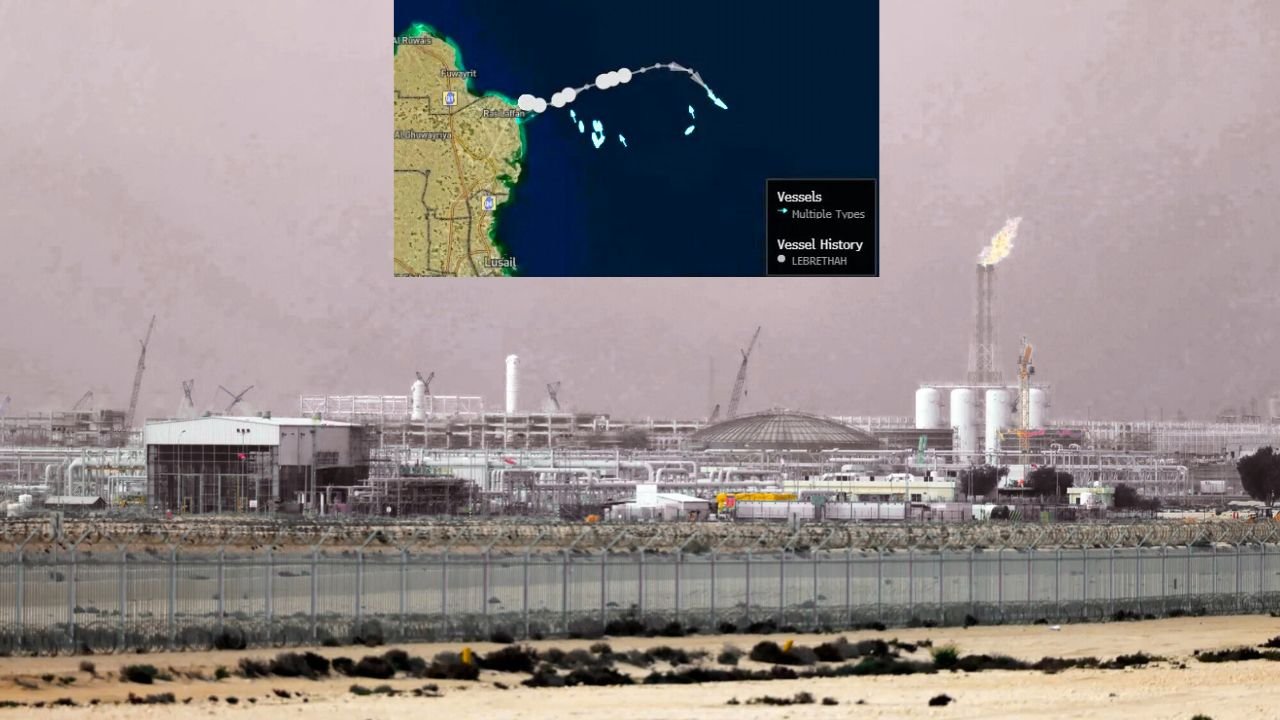
Energy markets are watching closely as Qatar, the world’s leading liquefied natural gas exporter, appears to have resumed shipments after an unexpected production halt.
The restart comes after rising tensions in the Middle East forced the country to declare force majeure and temporarily shut down operations at its massive Ras Laffan LNG terminal.
Now, new shipping data suggests the first LNG cargoes may already be moving again. For global energy markets already facing uncertainty, the development could have significant implications.
Why Qatar Stopped LNG Production
Earlier this week, Qatar halted operations at the Ras Laffan export facility, the largest liquefied natural gas plant in the world.
The shutdown followed a reported drone attack linked to escalating regional conflict involving Iran.

Because Ras Laffan handles a huge portion of Qatar’s gas exports, the disruption immediately triggered concerns about global LNG supply.
Why Ras Laffan Matters
- Largest LNG export terminal in the world
- Handles a major share of global LNG trade
- Supplies energy to Asia and Europe
Energy analysts quickly warned that even a short interruption could ripple across global gas markets.
First LNG Tankers Begin Loading Again
Despite the shutdown announcement, ship-tracking data indicates that Qatar has started loading cargoes again from storage.
Two LNG tankers appear to be involved:
- Al Ghashamiya – loaded at Ras Laffan and currently waiting in the Persian Gulf
- Lebrethah – departed with a deeper draft, indicating it likely carries LNG
The second tanker has signaled Bangladesh as its destination, with an expected arrival in mid-March.
However, the journey may not be straightforward.
The Strait of Hormuz Problem
The biggest challenge facing LNG shipments right now is the Strait of Hormuz.
This narrow waterway is one of the world’s most critical energy corridors.
Nearly 20% of global LNG shipments typically pass through it.
Why shipping remains risky
- Regional hostilities have disrupted commercial navigation
- Many shipping companies have paused transit
- Tankers may be forced to wait offshore
Because of this uncertainty, the LNG tanker heading toward Bangladesh may temporarily remain in the Persian Gulf until safe passage becomes possible.
How LNG Exports Continue Even After Shutdowns
One surprising detail is that LNG plants can still ship cargoes even after production stops.
This happens because export terminals store large volumes of liquefied gas in storage tanks.
How the process works
- Gas is liquefied and stored in large tanks
- Ships can load fuel from storage even if production stops
- Shipments continue until storage supplies run out
This explains how Qatar was able to load tankers despite halting production earlier in the week.
How Long Could the Shutdown Last?
According to Sherida Al‑Kaabi, restarting Ras Laffan could take weeks or even months depending on security conditions.
If the facility remains offline for an extended period, global LNG markets could tighten significantly.
Countries that rely heavily on Qatari LNG may need to seek alternative supplies.
Major LNG importers affected
| Region | Why It Matters |
|---|---|
| Asia | Largest LNG demand globally |
| Europe | Increasing LNG imports after reducing Russian gas |
| South Asia | Heavily dependent on imported gas |
Energy traders are closely monitoring developments because even small supply disruptions can move prices quickly.
Potential Impact on Global Energy Prices
If LNG shipments slow down, natural gas prices could rise worldwide.
Several factors will influence the market in the coming weeks:
- Security conditions in the Persian Gulf
- Shipping access through the Strait of Hormuz
- Duration of the Ras Laffan shutdown
Energy markets have already experienced volatility due to Middle East tensions.
A prolonged disruption could push LNG prices higher, especially in Asia.
Key Takeaways
- Qatar halted operations at the Ras Laffan LNG export terminal after a regional security incident
- Ship-tracking data shows the first LNG cargoes loading again from storage tanks
- Tankers may face delays due to instability near the Strait of Hormuz
- Restarting full production could take weeks or months
- Global gas markets are closely monitoring supply risks
FAQs
What is force majeure in energy contracts?
Force majeure allows suppliers to suspend deliveries due to extraordinary events like war, natural disasters, or major infrastructure damage.
Why is Qatar important to the LNG market?
Qatar is one of the largest LNG exporters in the world, supplying gas to Asia, Europe, and other global markets.
Can LNG exports continue during a shutdown?
Yes. Export terminals often store liquefied gas, allowing shipments to continue temporarily even if production stops.
Why is the Strait of Hormuz critical for LNG shipments?
It is a key shipping route connecting Gulf energy exporters to global markets, carrying about 20% of the world’s LNG trade.
Could this affect global gas prices?
Yes. Any prolonged disruption in LNG supply can push prices higher, especially in regions heavily dependent on imports.
Conclusion
Qatar’s apparent restart of LNG shipments offers a small sign of stability during an uncertain moment for global energy markets. However, the situation remains fragile.
With security concerns still affecting the Strait of Hormuz and production at Ras Laffan not fully restored, energy traders and governments are watching every tanker movement closely.
If tensions ease, global gas supply could stabilize quickly. But if disruptions continue, LNG markets may face another period of volatility—something consumers and industries worldwide will feel.