
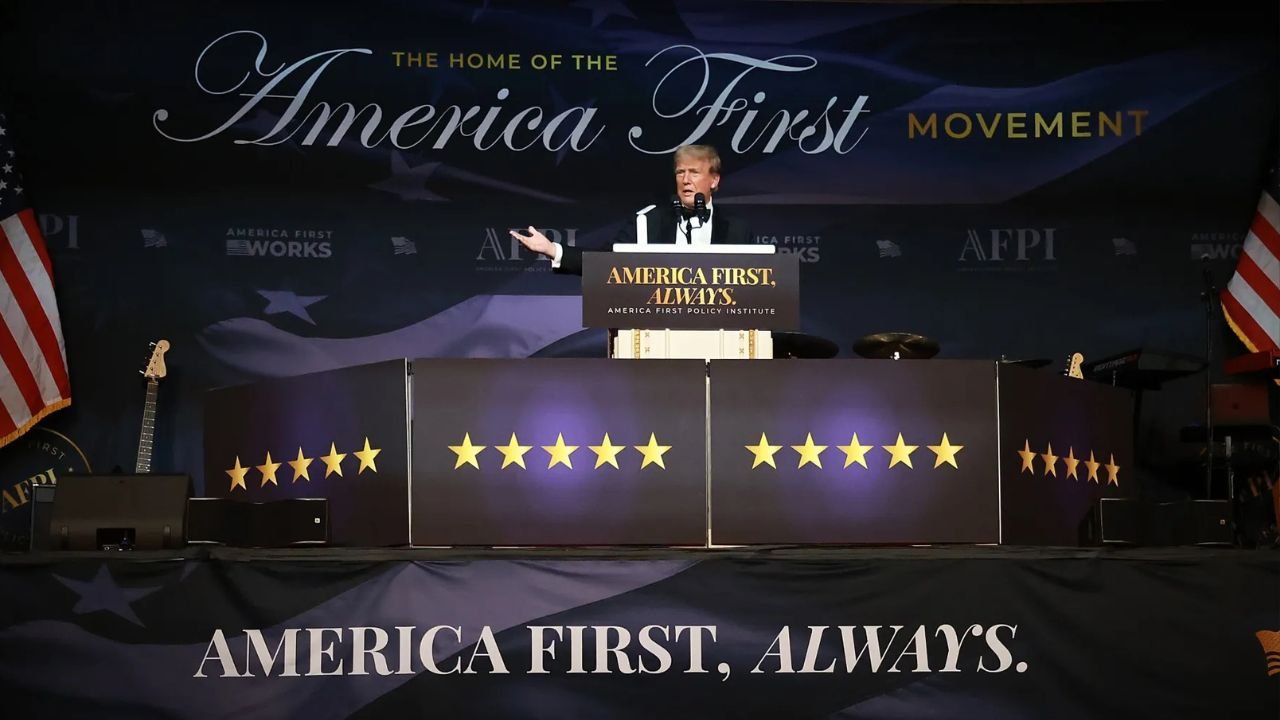
A growing political divide is emerging inside the “Make America Great Again” (MAGA) movement as President Donald Trump intensifies military actions against Iran.
Trump recently declared he would accept nothing less than Iran’s “unconditional surrender.” He also suggested the United States could help rebuild the country’s economy if a new leadership aligned with U.S. interests comes to power.
But as the conflict enters its second week and oil prices surge, the strategy is triggering backlash from some of Trump’s most loyal supporters.
For a political movement built around the promise of avoiding foreign wars, the situation is creating one of the most visible fractures within the MAGA coalition.
Why the Iran Conflict Is Dividing Trump’s Base
Trump rose to political prominence by criticizing long-running Middle East wars and promising a more “America First” foreign policy.
During past campaigns, he repeatedly condemned U.S. involvement in conflicts such as the Iraq War, calling it a major mistake.
Now, some of his supporters say the Iran campaign contradicts that message.
Several influential conservative voices have publicly questioned the military escalation.
Prominent MAGA critics include
- Tucker Carlson
- Megyn Kelly
- Marjorie Taylor Greene
Many critics argue the United States should avoid becoming deeply involved in another Middle East conflict.
Some worry the war could expand and pull the country into a prolonged regional crisis.
Economic Concerns Are Adding Pressure
The political divide is not only about foreign policy. Many voters are worried about the economic consequences of a longer conflict.
The fighting has already pushed energy prices higher.
According to the American Automobile Association, the average price of gasoline in the United States has climbed to about $3.32 per gallon, up from roughly $2.98 before the strikes began.
Higher energy prices can affect household budgets quickly.
Why voters are worried
- Rising gasoline prices
- Higher transportation costs
- Potential inflation across everyday goods
For many Americans who supported Trump because of economic issues, the war could feel like a distraction from domestic priorities.
Polls Show Mixed Support for Military Action
Public opinion surveys reveal conflicting views among Republican voters.
Recent polls show that support for the strikes exists but is far from unanimous.
Poll results snapshot
| Poll Source | Republican Support for Strikes |
|---|---|
| CNN survey | About 77% support |
| Reuters survey | Around 55% support |
Among the broader U.S. population, both polls show a majority of adults opposing the war.
These mixed numbers highlight the internal debate now unfolding within conservative circles.
The White House Pushes Back
The Trump administration has moved quickly to defend the operation.
Senior officials including J.D. Vance, Pete Hegseth, and Marco Rubio have appeared in media interviews and congressional briefings explaining the decision.
Officials say the strikes were necessary to counter security threats and stabilize the region.
White House spokesperson Karoline Leavitt emphasized that Trump remains the central figure of the MAGA movement.
She told reporters the president believes military action was necessary to protect American interests.
Congressional Debate Over War Powers
The conflict has also sparked debate in Congress.
Republican Representative Thomas Massie joined Democratic Representative Ro Khanna in proposing a measure that would limit additional military action without congressional approval.
The proposal ultimately failed, but the debate revealed growing unease among lawmakers.
Massie argued that the MAGA movement itself appears divided.
Political Risks Ahead of Midterm Elections
The timing of the conflict could carry political consequences.
Midterm elections are approaching, and economic concerns remain a major issue for voters.
Several factors could shape voter reactions in the coming months.
Potential political risks
- Higher fuel prices
- Economic uncertainty
- Fear of a prolonged war
Trump’s allies say the administration is trying to balance national security priorities with economic concerns.
However, analysts say the situation could influence voter attitudes heading into the next election cycle.
How Trump’s Foreign Policy Is Evolving
Trump’s current strategy represents a shift from his earlier campaign rhetoric.
In both the 2016 and 2024 elections, he positioned himself as a candidate who would avoid major overseas conflicts.
The campaign message appealed especially to younger voters who were skeptical of long wars.
Influential commentators and podcasters had promoted that non-interventionist approach.
Now, supporters are debating whether the current military campaign fits that philosophy.
Key Takeaways
- Trump’s Iran campaign has sparked rare divisions inside the MAGA movement.
- Some prominent conservative voices oppose deeper U.S. involvement in the conflict.
- Rising oil and gasoline prices are increasing economic concerns among voters.
- Polling shows mixed support for the strikes even among Republicans.
- The political impact could influence upcoming midterm elections.
FAQs
Why are some MAGA supporters criticizing the Iran war?
Some supporters believe Trump originally promised to avoid foreign wars and focus on domestic issues.
Does the MAGA movement fully oppose the war?
No. Polls show many Republicans still support the strikes, though opinions vary widely.
How has the conflict affected the economy?
Oil and gasoline prices have risen, which could increase inflation and impact household budgets.
Did Congress try to stop additional strikes?
Yes. Lawmakers proposed limiting further attacks without congressional approval, but the measure failed.
Could the conflict affect upcoming elections?
Possibly. Rising energy prices and foreign policy debates could influence voter sentiment.
Conclusion
The Iran conflict is revealing a rare moment of disagreement within the MAGA movement. For a political coalition that has often rallied behind Trump’s decisions, the debate over military intervention shows how complex foreign policy issues can reshape alliances.
As the conflict continues and economic effects become clearer, the political consequences may extend well beyond the battlefield. Whether the divide deepens or fades will likely depend on how the situation develops in the weeks ahead.