A massive advertising campaign launched by the U.S. Department of Homeland Security has triggered political controversy after investigators found that several firms tied to past campaigns of Donald Trump were involved in placing the ads.
The program, worth about $240 million, aimed to encourage undocumented migrants to voluntarily leave the United States and to recruit new immigration officers. But critics say the way the contracts were awarded raises serious questions about transparency and political connections.

The debate intensified after Trump announced he would remove Kristi Noem from her role following bipartisan criticism in Congress.
What the DHS Advertising Campaign Was Designed to Do
The campaign launched shortly after Trump declared a national emergency at the United States–Mexico border.
Officials said the ads served two primary purposes:
- Persuade undocumented immigrants to self-deport
- Recruit new agents for U.S. Immigration and Customs Enforcement
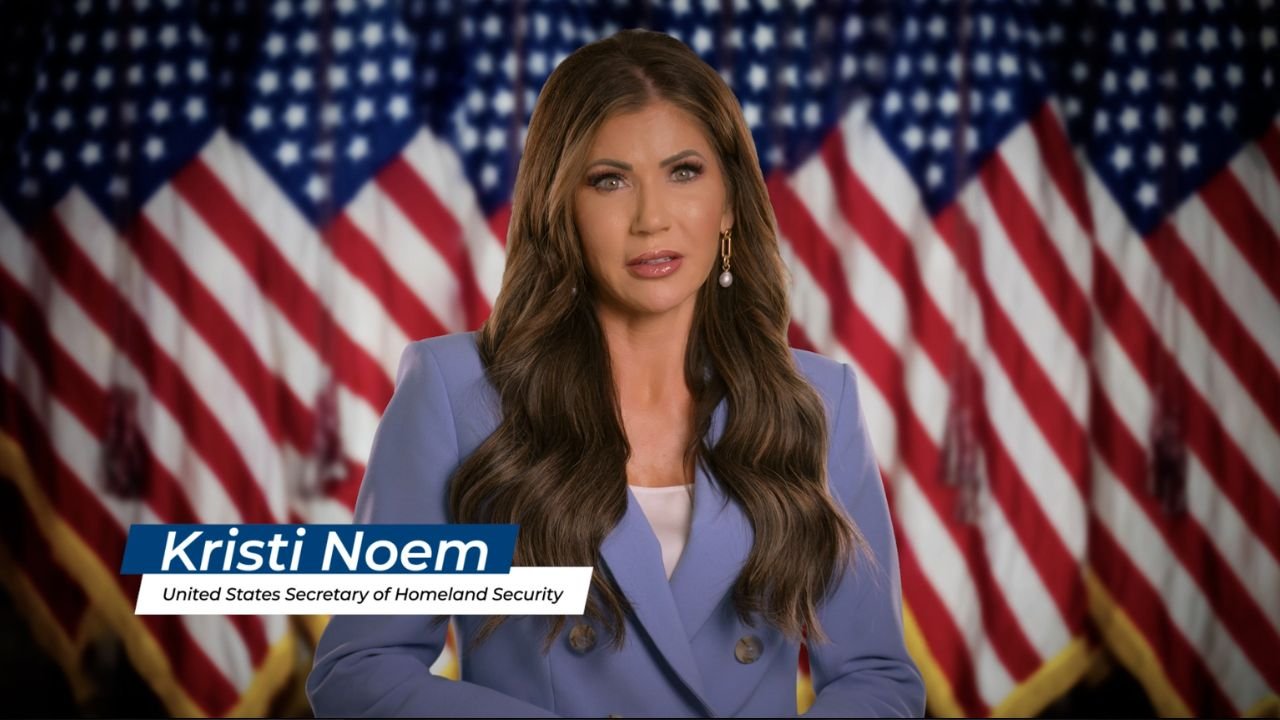
The ads ran nationwide on television and digital platforms, often featuring Noem delivering direct messages about immigration enforcement policies.
According to ad-tracking data, more than 92,000 television commercials aired across the United States between early 2025 and the end of the year.
Media Firms With Political Connections
Investigators discovered that two major media placement firms involved in the campaign have long histories working with Trump-related political organizations.
Key companies involved
- Strategic Media Services Inc.
- Previously received more than $269 million for advertising tied to Trump’s 2024 campaign.
- Smart Media Group LLC
- A subsidiary reportedly handled over $329 million in advertising for Trump-aligned political committees.

These companies were subcontracted through another firm that received the main government contract to place advertisements.
Critics say the arrangement raises concerns about favoritism and conflicts of interest.
How the Contracts Were Awarded
The largest contract — valued at about $143 million — went to a company called Safe America Media.
The firm was incorporated just days before receiving the government contract, according to procurement records.
Because the administration had declared a national emergency at the border, DHS officials used special procurement procedures that allowed them to bypass standard competitive bidding requirements.
Normally, federal agencies must seek multiple bids to ensure transparency and the best value for taxpayer money.
Supporters of the decision say emergency powers allowed the department to act quickly.
Opponents argue the process reduced oversight.
Breakdown of DHS Ad Campaign Spending
| Category | Estimated Spending |
|---|---|
| Total campaign budget | $240 million |
| Media purchases | About $185 million |
| TV ad placements (by late 2025) | Around $54 million |
| Recruitment ads for immigration officers | Tens of thousands of broadcasts |
The campaign is considered one of the largest marketing efforts ever undertaken by the Department of Homeland Security.
Only military recruitment drives and public health campaigns during the COVID‑19 pandemic have exceeded similar spending levels.
Political Reaction From Both Parties
The advertising effort quickly drew criticism from lawmakers across the political spectrum.
Republican and Democratic members of Congress questioned whether the campaign was an appropriate use of taxpayer funds.
During a Senate hearing, John Kennedy joked that the campaign appeared more effective at increasing Noem’s personal visibility than solving immigration issues.
Meanwhile, oversight groups raised broader concerns about possible political favoritism.
A government watchdog organization described the situation as resembling “cronyism,” suggesting that personal or political relationships may have influenced contract decisions.
Questions About Campaign Effectiveness
Data from advertising trackers also raised questions about how effectively the ads targeted their intended audience.
For example:
- Some commercials aired heavily in states with smaller undocumented populations
- Recruitment ads ran in large cities where local police officers typically receive better pay and benefits than federal immigration jobs
- Spanish-language television networks carried few or no recruitment ads, despite language skills often being valuable for immigration officers
These findings led analysts to question whether the ad placements were strategically planned.
DHS Defends the Campaign
A spokesperson for the Department of Homeland Security said the campaign followed federal rules and was highly effective.
Officials claim the program helped support immigration enforcement efforts and recruit thousands of new officers.
According to DHS statements, more than 12,000 agents and officers were hired during the recruitment campaign.
The agency also said it does not control which media buyers contractors hire, meaning subcontractor relationships are determined by the main contractor.
Key Takeaways
- A $240 million DHS advertising campaign has drawn scrutiny over links to firms tied to Trump political campaigns.
- The program focused on self-deportation messaging and immigration officer recruitment.
- Critics argue emergency procurement rules allowed the contracts to bypass full competition.
- Data suggests some ads may not have been placed in the most effective markets.
- Lawmakers and watchdog groups are now calling for greater transparency.
FAQs
Why was Kristi Noem criticized over the ad campaign?
Lawmakers questioned the size of the spending and whether firms connected to political allies benefited from the contracts.
What was the purpose of the DHS advertisements?
The ads encouraged undocumented immigrants to leave voluntarily and promoted recruitment for immigration enforcement jobs.
Were the contracts competitively bid?
Some contracts were awarded using emergency procurement rules, which allowed DHS to bypass standard competitive bidding.
Did the campaign feature Kristi Noem personally?
Yes. Many ads included Noem speaking directly about immigration enforcement policies.
Is the campaign under investigation?
Congressional lawmakers and oversight groups have requested documents and reviews to examine how the contracts were awarded.