
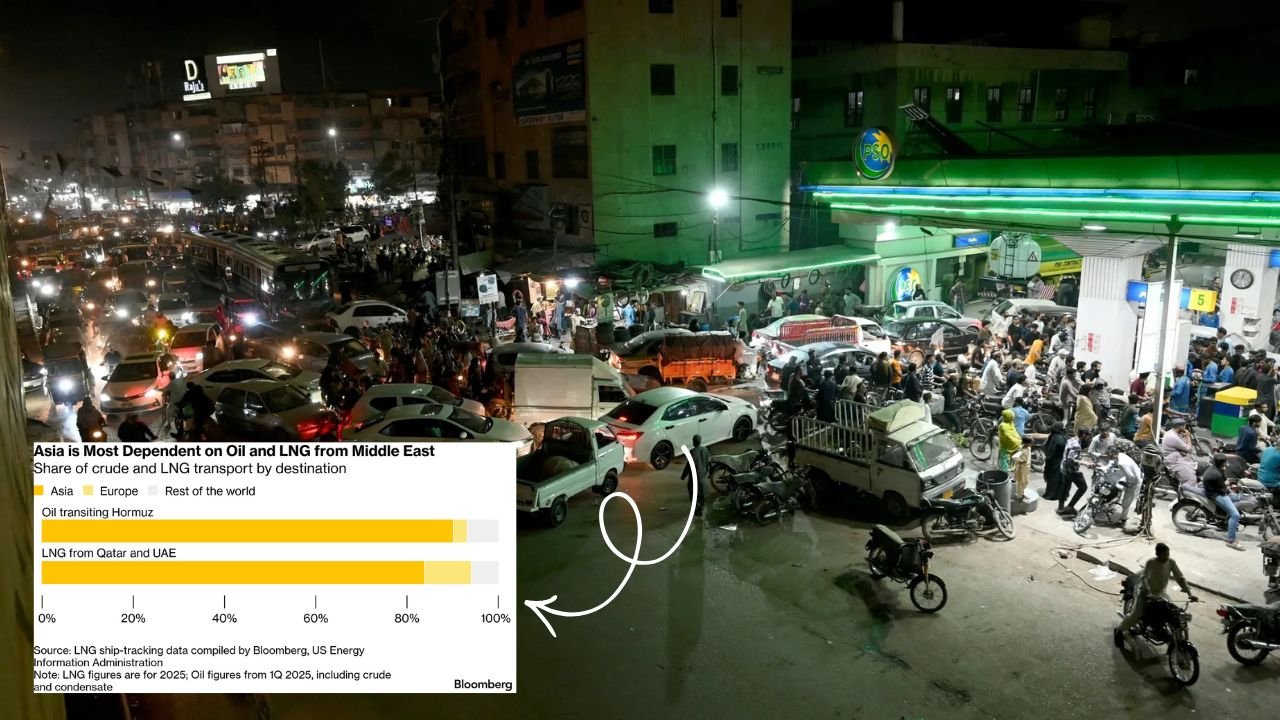
Across Asia, the energy shock from escalating tensions in the Middle East is already being felt on the ground. From farmers lining up for diesel to factories bracing for higher production costs, a regional fuel crunch is spreading quickly.
The disruption began after military strikes in Iran triggered retaliatory attacks and severely disrupted shipping through the Strait of Hormuz. This narrow waterway connects major oil producers in the Persian Gulf to the rest of the world and normally handles a large share of global energy shipments.
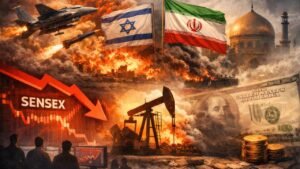
Even though global crude prices have not yet surged dramatically, many Asian economies that depend heavily on imported energy are already dealing with supply shortages, price hikes, and rationing measures.
Why Asia Is Feeling the Energy Shock First
Asia is the world’s largest energy-consuming region and relies heavily on imports from the Middle East. When supply disruptions occur in the Persian Gulf, the effects quickly spread across the region.
Several countries depend on Hormuz for a large share of their energy imports.
Countries heavily reliant on Middle East energy
- India – imports a major portion of its crude oil through Hormuz
- China – receives nearly half of its oil from the Gulf region
- Pakistan – relies heavily on imported natural gas and oil
- Bangladesh – depends on imported LNG for power generation
Because of this dependence, supply interruptions can quickly trigger shortages and price spikes.
Fuel Shortages Begin to Appear
Reports from across Asia suggest that fuel supplies are tightening rapidly.
In northern Thailand, farmers are lining up at fuel stations to secure diesel needed for the rice harvest season.

Some gas stations have begun running out of fuel, forcing farmers to store diesel in containers whenever it becomes available.
Industrial sectors are also feeling the pressure.
Factories that rely on natural gas for manufacturing processes — such as textiles, fertilizers, and chemicals — are facing rising costs and possible production slowdowns.
In Pakistan, textile producers report input costs jumping by as much as 35 percent because of fuel shortages.
Governments Introduce Emergency Measures
Several governments have begun implementing short-term measures to reduce energy demand and protect supplies.
Emergency actions taken across Asia
- The Philippines shortened the workweek for government offices to save energy.
- Bangladesh limited decorative lighting during Ramadan celebrations.
- China asked refiners to reduce fuel exports to protect domestic stockpiles.
- Japan and South Korea are seeking alternative fuel shipments.
These steps highlight how quickly governments are reacting to avoid a deeper energy crisis.
Natural Gas Shortages Add Another Problem
The situation is especially serious for countries dependent on liquefied natural gas.
When QatarEnergy declared force majeure after infrastructure disruptions, it triggered a wave of cancellations across Asia’s LNG market.
LNG dependency in Asia
| Country | Share of LNG from Qatar |
|---|---|
| China | About 30% |
| India | Roughly 50% |
| Pakistan | Nearly 99% |
With shipments delayed or cancelled, gas distributors have begun limiting deliveries to industrial customers.
India Faces Rising Energy Risks
Among Asian economies, India is particularly vulnerable.
The country imports most of its crude oil and relies on the Strait of Hormuz for nearly half of those shipments.
Refineries have already begun adjusting operations.
One facility operated by Mangalore Refinery and Petrochemicals Limited reportedly halted some exports and shut down part of its processing operations due to limited crude supplies.
Meanwhile, Reliance Industries has set up monitoring teams to track developments in the Middle East and identify alternative crude sources.
Industry and Consumers Feel the Pressure
For businesses, rising fuel prices translate into higher production costs.
Industries that rely heavily on energy — including fertilizers, textiles, and manufacturing — may soon face reduced output if supply disruptions continue.
Ordinary consumers are also beginning to notice the impact.
Cooking gas prices are rising in several regions, and transportation costs are climbing as diesel becomes more expensive.
In rural areas of India, some households are already considering switching back to traditional fuel sources such as firewood.
Key Takeaways
- Energy disruptions in the Persian Gulf are creating fuel shortages across Asia.
- The Strait of Hormuz plays a crucial role in supplying oil and gas to the region.
- Countries including India, China, and Pakistan are highly dependent on Gulf energy imports.
- Governments are introducing emergency measures to conserve fuel.
- Rising prices and supply shortages could affect industries and consumers alike.
FAQs
Why is Asia experiencing a fuel crunch?
Disruptions in the Persian Gulf have slowed energy shipments through the Strait of Hormuz, a key route for global oil and gas.
Which countries are most affected?
Import-dependent nations such as India, Pakistan, Bangladesh, and Thailand are among the hardest hit.
Are fuel prices rising in Asia?
Yes. Diesel, gas, and natural gas prices have increased as supply shortages spread across the region.
What steps are governments taking?
Several countries are reducing energy consumption, seeking alternative supplies, and restricting exports.
Could the crisis worsen?
If shipping disruptions continue, energy shortages and price increases could intensify across Asia.
Conclusion
Asia’s fuel crunch highlights how quickly global energy disruptions can affect everyday life. From farmers waiting in diesel queues to factories grappling with rising costs, the impact of Middle East tensions is spreading across the region.
If supply routes remain unstable, the coming months could bring deeper challenges for energy security, industrial production, and household budgets throughout Asia.