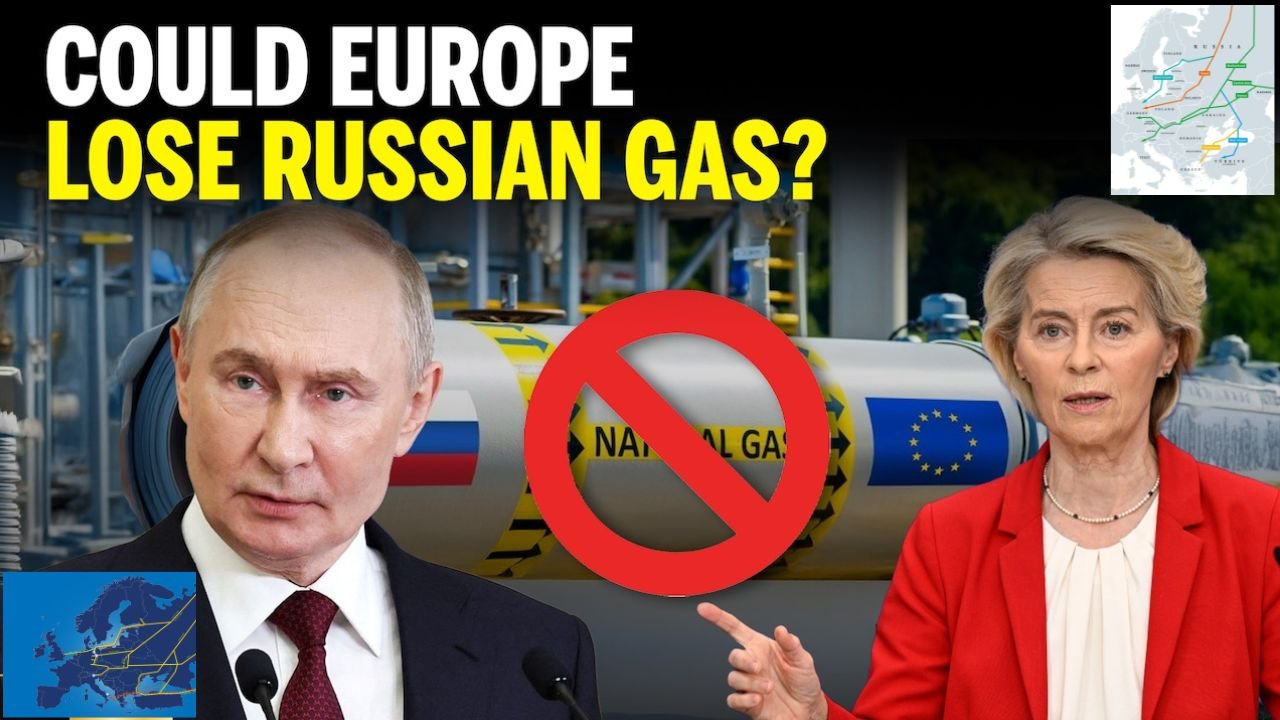
A major shift could be coming in the global energy market. Vladimir Putin has indicated that Russia may reduce or even end most of its natural gas exports to European Union, focusing instead on new markets willing to pay higher prices.
The comments come as Europe moves toward a long-term plan to phase out Russian fossil fuels. If Russia follows through, the decision could reshape global gas trade and energy prices for years to come.
Putin said his government will analyze whether redirecting gas supplies to emerging markets could provide stronger economic opportunities than continuing shipments to Europe.
Why Europe Wants to End Russian Gas Imports
Since Russia’s 2022 invasion of Ukraine, European countries have worked to reduce their dependence on Russian energy.
The EU recently outlined a plan to gradually ban both Russian pipeline gas and liquefied natural gas imports by 2027.

This move is part of a broader strategy to strengthen energy security and diversify supply sources.
Europe’s strategy includes
- Increasing renewable energy production
- Expanding liquefied natural gas (LNG) imports
- Building new energy infrastructure
- Reducing reliance on Russian pipeline supplies
For decades, Russia was one of Europe’s largest energy suppliers, making the shift one of the most significant changes in global energy trade.
Russia Looking Toward New Markets
Putin suggested that emerging markets outside Europe could become more attractive buyers for Russian gas.
He noted that some international customers are willing to pay higher prices for energy supplies.
Potential alternative markets
- Asian economies with growing energy demand
- Middle Eastern and African markets
- Expanding LNG buyers worldwide
Russia has already increased energy cooperation with countries such as China and India, both of which have boosted purchases of Russian oil and gas in recent years.
Expanding exports to these regions could help offset declining sales to Europe.
Europe Still Buys Some Russian Gas
Despite the political tensions, Russian gas has not completely disappeared from Europe.
Pipeline shipments still reach several European countries.
Countries still importing Russian gas
- Hungary
- Slovakia
- Serbia
In addition, Russian gas is exported as LNG from projects such as Yamal LNG.
According to EU estimates, Russian gas accounted for about 13 percent of the bloc’s imports in 2025, valued at more than €15 billion annually.
Rising Energy Prices Add Pressure
Energy markets have already reacted to geopolitical tensions.
European natural gas prices recently climbed to a three-year high, driven partly by global supply concerns and instability in key shipping routes.
The situation worsened amid tensions in the Middle East and fears about disruptions in the Strait of Hormuz.
Although prices eased slightly after the United States announced plans to protect shipping routes, energy markets remain volatile.
Russia’s Energy Strategy Is Changing
Russia’s long-term energy strategy appears to be evolving.
Instead of relying heavily on European customers, Moscow is exploring a broader global customer base.
Key factors shaping Russia’s strategy
- Declining demand from Europe
- New pipeline projects to Asia
- Growth in global LNG trade
- Higher energy prices in emerging markets
If Russia significantly redirects its gas exports, global supply routes could shift dramatically.
Comparing Europe and Emerging Markets
| Market | Demand Trend | Key Factor |
|---|---|---|
| Europe | Declining demand for Russian gas | Energy independence policies |
| Asia | Rapidly increasing demand | Industrial growth and population |
| Emerging economies | Expanding energy consumption | Infrastructure development |
This shift suggests that energy flows may increasingly move from west to east in the coming decade.
Key Takeaways
- Russia may redirect natural gas exports away from Europe toward new global markets.
- The European Union plans to phase out Russian gas imports by 2027.
- Several European countries still receive limited Russian pipeline supplies.
- Growing energy demand in Asia could become a key outlet for Russian exports.
- Global gas markets may face long-term changes if Russia restructures its energy trade.
FAQs
Why does Europe want to stop importing Russian gas?
The EU wants to reduce energy dependence on Russia following geopolitical tensions and the Ukraine conflict.
Which countries still buy Russian gas in Europe?
Some countries including Hungary, Slovakia, and Serbia continue importing Russian pipeline gas.
What markets could Russia target instead of Europe?
Russia may expand exports to Asian and emerging markets with rising energy demand.
How important is Russian gas to Europe today?
Russian gas made up about 13 percent of EU imports in 2025, much lower than before 2022.
Could this change global energy prices?
Yes. Major shifts in gas supply routes could influence prices and energy security worldwide.
Conclusion
Russia’s potential move to redirect gas exports away from Europe marks another turning point in the global energy landscape.
As Europe pursues energy independence and Russia searches for new customers, the balance of power in international gas markets could shift dramatically.
Whether this transition happens quickly or gradually, one thing is clear: the global energy map is being redrawn.