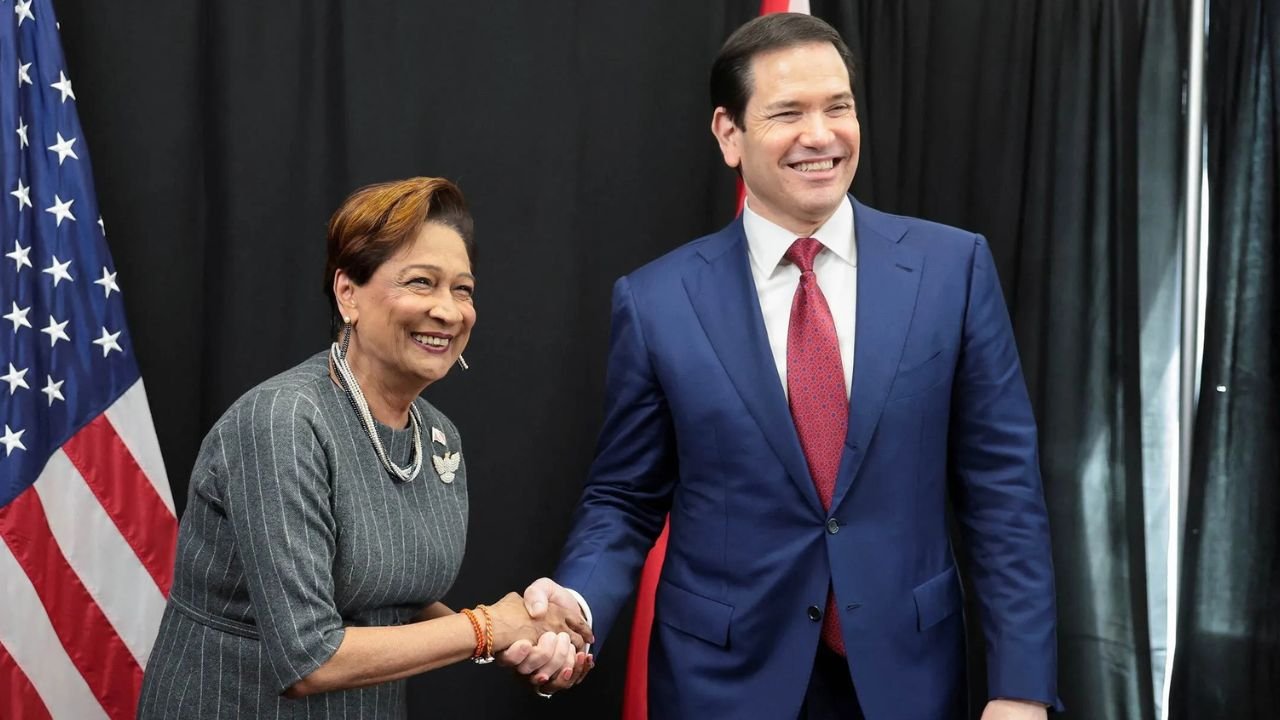
In the Caribbean, where many leaders traditionally avoid taking sides in U.S. geopolitical conflicts, Kamla Persad-Bissessar has taken a strikingly different approach.
Her government’s support for the anti-drug campaign launched by Donald Trump has placed Trinidad and Tobago in a unique position within the region.
While several Caribbean nations have remained cautious or critical of Washington’s aggressive strategy, Persad-Bissessar publicly endorsed the crackdown on suspected drug-running vessels near Venezuela.
The decision has sparked debate at home and abroad about whether the small island nation is aligning too closely with U.S. policy.
What Is the “Drug-Boat” Campaign?
The controversy began after U.S. forces launched a series of operations targeting boats suspected of trafficking drugs across the Caribbean.
Officials in Washington claimed the vessels were connected to organized crime networks operating between Venezuela and neighboring countries.
The campaign escalated when U.S. forces reportedly destroyed a suspected smuggling vessel during an operation in the region.
American officials said the boat was linked to Tren de Aragua, a gang believed to be involved in drug trafficking and other criminal activities.
However, some critics say there has been limited public evidence supporting those claims.
Why Trinidad and Tobago Matters in the Conflict
Trinidad and Tobago sits just seven miles from Venezuela’s mainland, separated by the narrow waters of the Gulf of Paria.
Because of this proximity, the islands have long been part of regional smuggling routes involving fuel, contraband, and narcotics.
Key geographic facts
- Population: roughly 1.5 million people
- Distance from Venezuela: about 7 miles at the closest point
- Major economic sector: oil and natural gas
This location makes the country strategically important for both law enforcement and regional trade.
For decades, authorities on both sides of the border have struggled to control illegal trafficking in the area.
Regional Leaders Take a Different Tone
While Trinidad and Tobago’s government supported the U.S. strategy, other Caribbean leaders took a more cautious stance.
Several members of the Caribbean Community voiced concerns about escalating tensions in the region.
Some critics worry that military operations could worsen relations with Venezuela and destabilize the Caribbean.
Others say the region has a long history of sensitivity toward foreign intervention.
Because of that history, open support for a U.S. military campaign is unusual among Caribbean governments.
Domestic Reaction Inside Trinidad
Within Trinidad and Tobago, the government’s position has sparked a lively debate.
Some residents support a tougher stance against drug trafficking.
Others fear the country may become too closely tied to U.S. foreign policy.
The controversy intensified after reports that bodies were found along parts of the northeastern coastline following one of the strikes.
Local activists questioned whether the operation occurred entirely in international waters, as U.S. officials initially stated.
Community groups also raised concerns about possible civilian casualties.
Economic Stakes Behind the Diplomacy
Analysts say the government’s position may be influenced by economic considerations.
Trinidad and Tobago relies heavily on energy exports, and cooperation with the United States plays a major role in its economic strategy.
One key issue is the Dragon gas field, located offshore near Venezuela.
The field is expected to supply natural gas to projects involving Shell and Trinidad’s national energy sector.
Earlier negotiations allowed Trinidad to develop the gas field with special exemptions from U.S. sanctions.
But those arrangements were later revoked by Washington, creating uncertainty for the project.
Some analysts believe stronger diplomatic support for U.S. policies could help revive negotiations over energy cooperation.
Comparing Regional Positions
| Country / Region | Position on U.S. Drug-Boat Campaign |
|---|---|
| Trinidad and Tobago | Strong public support |
| Other CARICOM members | Mostly cautious or critical |
| U.S. territories (Puerto Rico, USVI) | Cooperative with U.S. operations |
This contrast has made Trinidad and Tobago one of the most visible regional supporters of Washington’s strategy.
Political Risks for the Government
Backing a powerful ally like the United States can bring diplomatic advantages, but it also carries risks.
If tensions with Venezuela escalate further, Trinidad could find itself caught between major regional powers.
Political analysts say the decision represents a major strategic gamble.
For Persad-Bissessar, the challenge will be balancing security cooperation with maintaining regional relationships.
Key Takeaways
- Trinidad and Tobago has strongly backed the U.S. anti-drug campaign in the Caribbean.
- The move sets the country apart from many other Caribbean governments.
- Geography makes Trinidad a key point in regional trafficking routes.
- Economic interests, particularly energy projects, may influence diplomatic decisions.
- Domestic debate continues over whether the country should align so closely with U.S. policy.
FAQs
Why is Trinidad and Tobago supporting the U.S. campaign?
The government says strong action against drug trafficking is necessary for regional security and public safety.
What is the drug-boat campaign?
It refers to U.S. military operations targeting vessels suspected of transporting narcotics in Caribbean waters.
Why is the region sensitive about U.S. involvement?
Many Caribbean nations have historical concerns about foreign intervention in regional politics.
How close is Trinidad to Venezuela?
At its nearest point, the two countries are separated by only about seven miles of water.
Could energy projects influence Trinidad’s policy?
Yes. Offshore gas projects involving international companies could benefit from closer cooperation with the United States.