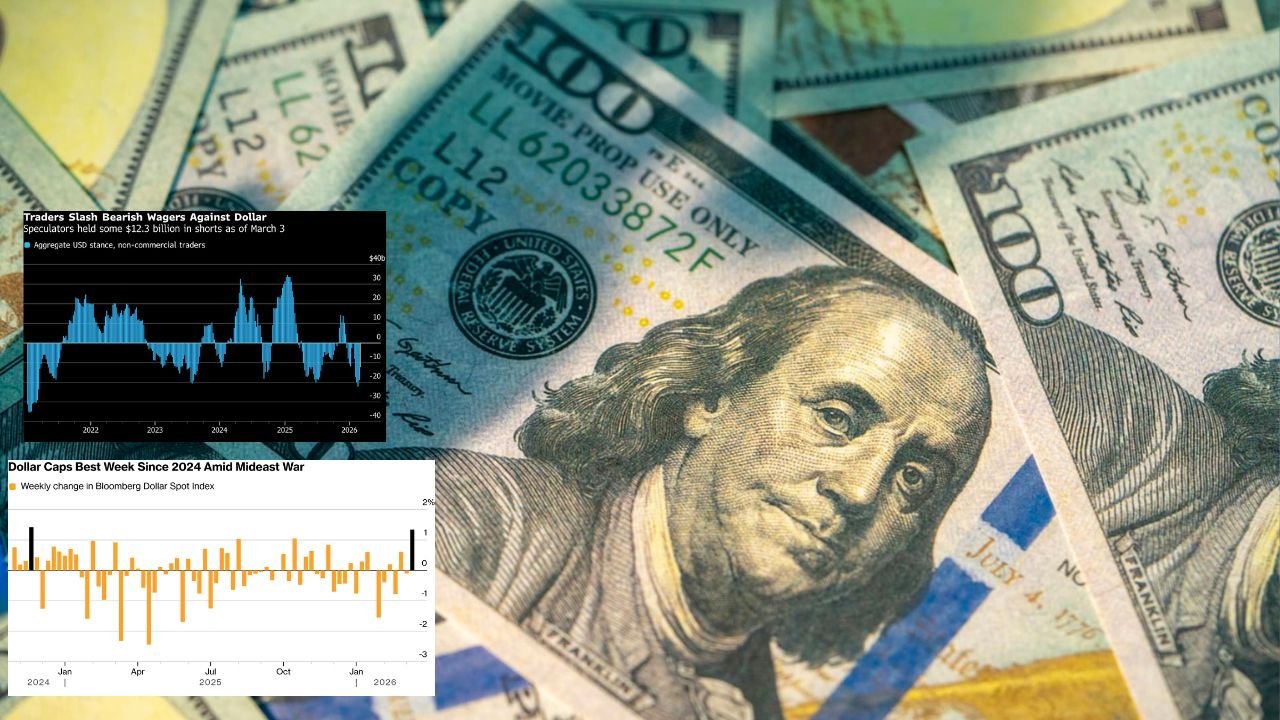
The US dollar just delivered its strongest weekly performance in more than a year. Investors rushed toward the currency as geopolitical tensions in the Middle East pushed oil prices sharply higher and forced traders to rethink expectations for interest rate cuts.
According to market data, the Bloomberg Dollar Spot Index climbed about 1.3% this week, marking its best performance since November 2024.

The surge highlights how quickly global markets can shift when energy prices rise and geopolitical risks intensify.
Why the Dollar Is Rising Right Now
The main driver behind the dollar’s rally is the escalating conflict involving Iran, Israel, and the United States.
The tensions have disrupted energy markets and sent oil prices soaring, triggering fears of renewed inflation.

When uncertainty rises, investors often move money into assets considered safer. The US dollar remains one of the most trusted global safe-haven currencies.
Key reasons the dollar gained this week
- Rising geopolitical risk in the Middle East
- Sharp surge in global oil prices
- Reduced expectations for Federal Reserve rate cuts
- Increased demand for safe-haven assets
These forces combined to drive strong demand for the US currency across global markets.
Oil Prices Jump Nearly 30%
Energy markets have been the biggest catalyst behind recent currency moves.
The price of Brent Crude Oil has surged almost 30% since the start of the conflict, reflecting fears of supply disruptions in the Persian Gulf.
Higher oil prices can quickly spread through the global economy because energy affects transportation, manufacturing, and consumer prices.
If energy costs remain elevated, inflation could rise again — something central banks are watching closely.
How Rising Oil Prices Affect the Federal Reserve
The Federal Reserve has been expected to begin cutting interest rates as inflation slows.
But the sudden jump in oil prices could change that outlook.
When energy costs increase, inflation may remain higher for longer. That means the Federal Reserve may delay interest rate cuts.
What traders are now expecting
| Scenario | Impact on Dollar |
|---|---|
| Fed delays rate cuts | Dollar strengthens |
| Oil prices remain high | Inflation fears increase |
| Global uncertainty rises | Safe-haven demand grows |
As traders adjust expectations, the dollar tends to benefit.
Jobs Data Added Another Twist
Economic data released this week showed that the US labor market may be cooling.
According to the Bureau of Labor Statistics, nonfarm payrolls dropped by 92,000 jobs last month.
The decline partly reflected reduced hiring in the healthcare sector due to strike activity.
Normally, weak job data might weaken the dollar. But this time the impact was limited because markets were focused more on energy prices and geopolitical risks.
Currency Markets React Around the World
The dollar’s strength has been visible across the global foreign exchange market.
Many major currencies declined against the US currency this week.
Major currency moves
- Euro dropped more than 1.5%
- Canadian Dollar remained relatively stable due to strong energy exports
- Several emerging market currencies weakened
Europe appears particularly vulnerable because it relies heavily on imported oil and natural gas.
Traders Reduce Bets Against the Dollar
Another sign of the currency’s strength is the shift in speculative trading positions.
Data from the Commodity Futures Trading Commission shows traders have sharply reduced bearish bets against the dollar.
Speculative short positions fell to about $12.3 billion, down from nearly $18.9 billion previously.
This suggests investors are becoming less confident in predictions that the dollar will weaken.
Why Investors Turn to the Dollar During Crises
The US dollar often strengthens during periods of global stress.
There are several reasons why it remains the world’s dominant safe-haven currency.
Key advantages of the US dollar
- Backed by the world’s largest economy
- Highly liquid global financial markets
- Widely used in international trade
- Strong demand for US Treasury securities
When global markets become unstable, investors often increase holdings of dollar-denominated assets.
Could the Dollar Rally Continue?
Currency strategists say the dollar’s future path depends largely on three factors:
- Oil price trends
- Federal Reserve interest rate decisions
- Duration of geopolitical tensions
If oil prices continue rising and the conflict persists, the dollar could remain strong.
However, if tensions ease and inflation pressures fall again, expectations for rate cuts may return.
Key Takeaways
- The US dollar posted its strongest weekly gain since 2024.
- Rising oil prices and Middle East tensions boosted safe-haven demand.
- Traders reduced expectations for Federal Reserve rate cuts.
- The euro weakened while energy-linked currencies held steadier.
- Speculative bets against the dollar dropped significantly.
FAQs
Why is the US dollar rising?
The dollar is gaining because investors are seeking safe assets during geopolitical tensions and rising oil prices.
How do oil prices affect currencies?
Higher oil prices can increase inflation and delay interest rate cuts, which often strengthens the US dollar.
Why did the euro weaken this week?
Europe depends heavily on imported energy, so rising oil and gas prices can hurt its economy and currency.
What is the Bloomberg Dollar Spot Index?
It tracks the performance of the US dollar against a basket of major global currencies.
Could the dollar keep rising?
Yes, especially if oil prices stay high and geopolitical tensions continue.
Conclusion
The dollar’s strongest week since 2024 shows how sensitive currency markets are to global events. Rising oil prices and geopolitical uncertainty have quickly shifted investor expectations and strengthened the US currency.
For now, energy markets and central bank policy will remain the biggest drivers of currency movements. If tensions continue to influence oil prices, the dollar may remain one of the most closely watched assets in global finance.
Investors and policymakers alike will be watching the next few weeks carefully to see whether this rally becomes a longer-term trend.