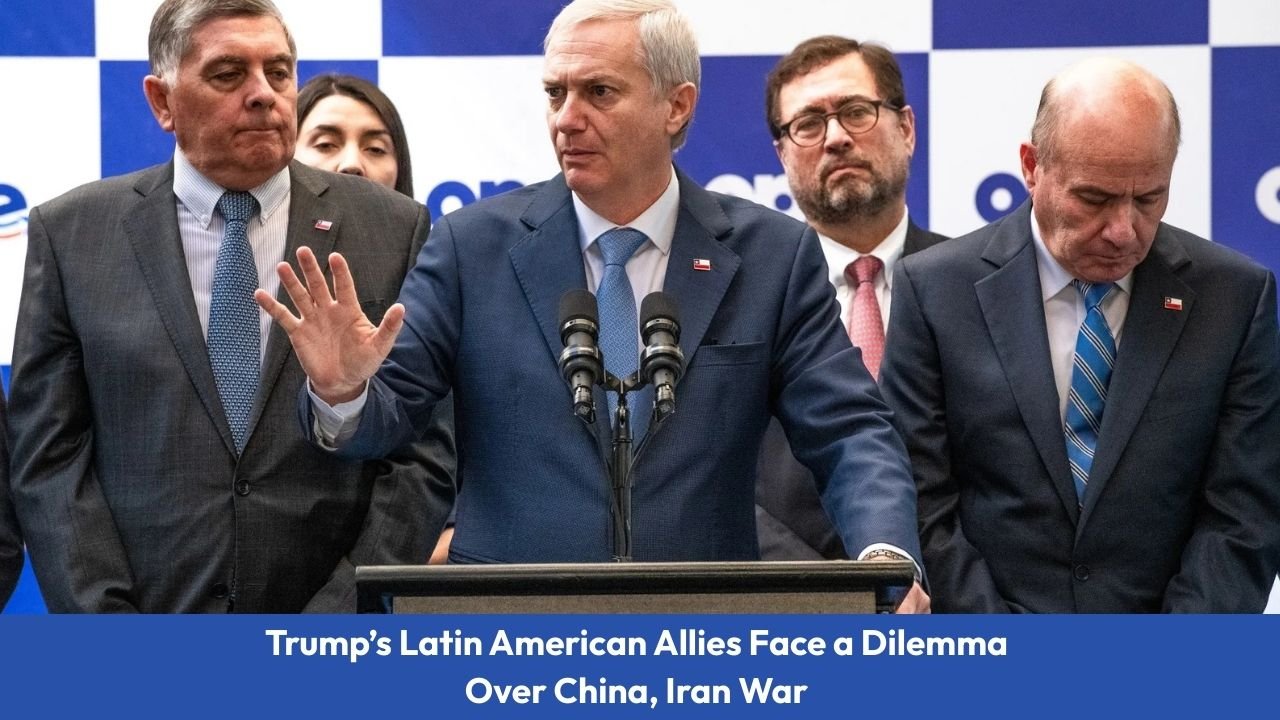
Tensions between the United States and several European partners surfaced again this week after Donald Trump sharply criticized some allies during a White House meeting with Friedrich Merz.
The discussion, which also included J.D. Vance and Marco Rubio, focused heavily on the ongoing military confrontation involving Iran and Israel.
During the meeting, Trump defended his decision to launch strikes on Iranian targets and warned that failing to act could have led to a larger global crisis.
Trump Defends Iran Strike as Preventing Wider Conflict
President Trump argued that U.S. military action against Iranian targets was necessary to prevent what he described as a potentially catastrophic conflict.
According to the president, the strikes targeted Iranian naval and air capabilities, significantly weakening their operational strength.

Trump told reporters that without the intervention, tensions surrounding Iran’s nuclear program could have escalated dramatically.
Key claims from the White House
- U.S. strikes targeted Iranian naval and air infrastructure
- Trump said military action prevented a larger conflict
- Officials suggested Iranian missile launches were ongoing but weakening
- Washington maintains the campaign is focused on security objectives
While critics have questioned the timing of the attack, Trump insisted the decision was based on intelligence assessments and growing security concerns.
Sharp Criticism of European Allies
During the meeting, Trump directed strong criticism toward several European countries, particularly Spain.
Spain reportedly declined U.S. requests to allow American forces to use certain military bases located on its territory during operations linked to the Iran conflict.
Those bases include key facilities in Rota and Morón, which have historically supported NATO missions.
Trump described Spain’s decision as “very uncooperative” and warned of possible economic consequences.
Countries mentioned during the discussion
| Country | Issue Raised by Trump |
|---|---|
| Spain | Refused access to U.S. military bases |
| United Kingdom | Slow response to supporting operations |
| Germany | Trade and defense spending disagreements |
Trump also expressed frustration with the United Kingdom, suggesting its support for the military campaign had been slower than expected.
European officials, however, indicated that any dispute with Spain would likely be handled through the European Union, which negotiates as a collective group.
Germany Attempts to Shift Discussion
German Chancellor Friedrich Merz attempted to redirect the conversation toward broader defense spending discussions.
He emphasized that many European countries are increasing military budgets to meet NATO commitments.
Merz noted that several allies are working toward defense spending levels of around three percent of national economic output.
The remarks appeared aimed at easing tensions and shifting focus away from disagreements over military cooperation.
However, Trump continued to express dissatisfaction with certain European policies, including energy strategies and immigration management.
Trump Praises China Ahead of Upcoming Summit
While criticizing some Western allies, Trump struck a more positive tone regarding China.
The president said the United States currently maintains a “very good relationship” with Beijing.
His comments come ahead of a planned summit with Xi Jinping, expected later this year.
Trump also suggested that trade relations between the two countries had improved compared with previous years.
Why the China comments matter
- The U.S. and China remain major economic rivals
- Diplomatic relations have fluctuated in recent years
- Upcoming meetings may address trade and security issues
- Cooperation could influence global economic stability
Analysts say Trump’s remarks signal an effort to maintain open dialogue despite ongoing geopolitical competition.
Uncertainty Around Future Trade Policy
When asked about long-term trade strategy, Trump gave a broad overview of potential tariff plans.
He mentioned a temporary import tax period that could last several months while the administration studies economic impacts.
However, specific details about future tariffs or trade agreements were not clarified during the meeting.
Trade policy has become a recurring point of debate both domestically and internationally as governments try to balance economic growth with political tensions.
Energy Security and the Strait of Hormuz
Trump also addressed concerns about global energy supply disruptions due to the Iran conflict.
He announced that the United States may escort commercial tankers through the Strait of Hormuz if necessary.
This narrow waterway is one of the world’s most important oil shipping routes, and any disruption could significantly affect global energy markets.
The president said ensuring the uninterrupted flow of energy remains a priority for the United States.
Key Takeaways
- Trump defended U.S. strikes on Iran, saying they prevented a larger conflict
- Spain and the UK were criticized for limited support during military operations
- Germany attempted to ease tensions during the White House meeting
- Trump praised China ahead of an upcoming summit with President Xi Jinping
- Energy security and shipping routes remain a major concern
Global leaders continue monitoring the situation closely as geopolitical tensions evolve.
FAQs
Why did Trump criticize Spain during the meeting?
Spain reportedly refused to allow U.S. forces to use certain military bases during operations related to the Iran conflict.
Did Trump confirm regime change plans in Iran?
No. Officials said the U.S. campaign focuses on military targets rather than political regime change.
Why is the Strait of Hormuz important?
It is a major shipping route through which a significant portion of the world’s oil supply travels.
What did Trump say about China?
He described U.S.–China relations as strong and said both countries currently maintain a positive working relationship.
Could trade tensions increase with Europe?
It is possible if disputes over military cooperation or tariffs continue to grow.
Conclusion
The White House meeting highlighted growing tensions between the United States and some European partners while also revealing shifting diplomatic dynamics with countries like China.
At the same time, the conflict involving Iran remains a major global concern, particularly because of its potential impact on regional stability and energy markets.
As negotiations, military actions, and diplomatic discussions continue, the coming weeks may play a crucial role in shaping both international security and economic relations worldwide.